
What Is a Dental Abscess?
A dental abscess is a dental emergency. It will not heal by itself.
Symptoms of a Dental Abscess
- Severe, throbbing pain (continuous and intensifying)
- Swelling of the face or jaw (sometimes spreading below the eye or into the neck)
- Fever (38 °C and above)
- Bad taste in the mouth (pus discharge)
- Pain on biting and chewing
- Swelling or blister on the gum (sinus tract/fistula)
- Swollen lymph nodes (under the jaw or in the neck)
- Difficulty opening the mouth (in severe infection)
💡 Emergency warning: If you have facial swelling combined with fever and difficulty swallowing, go to A&E immediately — the infection may threaten the airway.
Types of Dental Abscess
| Type | Location | Cause | Treatment |
|---|---|---|---|
| Periapical abscess | Tip of the root | Pulp infection caused by decay | Root canal treatment or extraction |
| Periodontal abscess | Gum pocket | Gum disease, foreign body | Drainage, curettage |
| Pericoronal abscess | Around a wisdom tooth | Partly impacted wisdom tooth | Antibiotic + extraction |
What Helps a Dental Abscess?
Home Measures (Temporary Relief)
These measures do not replace treatment — they only ease pain until you can see a dentist:
- Painkiller: Ibuprofen (600 mg) — reduces pain and inflammation
- Salt-water rinse: Warm water + 1 teaspoon of salt — three to four times a day
- Cold compress: Apply to the outside of the cheek for 15 minutes
- Head elevation: Keep your pillow raised when lying down
- Soft diet: Avoid hot and hard foods
What Not to Do
- Do not try to burst the abscess with a needle or sharp instrument
- Do not apply a hot compress (it can spread the infection)
- Do not place aspirin directly on the painful area
- Do not take antibiotics without a dentist's prescription
Dental Abscess Treatment
1. Antibiotic Therapy
If there is swelling and fever, your dentist will start antibiotics. Antibiotics bring the infection under control but do not treat the abscess on their own — definitive treatment (root canal or extraction) is always required.
2. Drainage
Once the abscess is mature, the dentist drains it under local anaesthesia. Once the pus is released the pain eases immediately.
3. Root Canal Treatment
Where the tooth can be saved, root canal treatment is performed. The infected pulp is removed and the canals are disinfected and filled.
4. Extraction
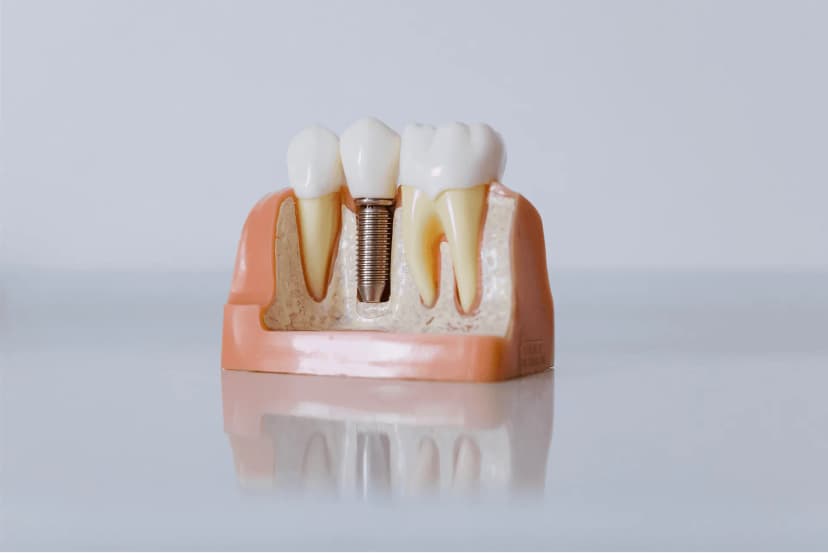
If the tooth cannot be saved it is extracted. The space can then be restored with a dental implant or a bridge.
5. Apicoectomy
If the abscess returns after root canal treatment, apical surgery (apicoectomy) may be performed.
Can a Dental Abscess Clear Up on Its Own?
No. An abscess does not heal spontaneously. Sometimes it forms a sinus tract that drains pus and the pain briefly eases — but the infection continues. An untreated abscess can:
- Spread into the jaw bone (osteomyelitis)
- Spread into the soft tissues (cellulitis, Ludwig's angina)
- Enter the bloodstream (sepsis — life-threatening)
- Damage neighbouring teeth
References
- Siqueira JF Jr, Rocas IN. Clinical implications and microbiology of bacterial persistence after treatment procedures. J Endod. 2008;34(11):1291-1301.e3. PubMed
- Robertson D, Smith AJ. The microbiology of the acute dental abscess. J Med Microbiol. 2009;58(Pt 2):155-162. PubMed
- Tonetti MS, Greenwell H, Kornman KS. Staging and grading of periodontitis: Framework and proposal of a new classification and case definition. J Periodontol. 2018;89 Suppl 1:S159-S172. PubMed
Do you suspect a dental abscess? At Derya Dental Clinic in Maltepe we offer same-day emergency appointments.
📞 0216 572 05 20 💬 WhatsApp appointment
Related Treatment Pages
This content is for informational purposes only and does not replace medical diagnosis or treatment. Please consult a specialist for decisions about your oral and dental health.