
What Is Root Canal Treatment?
Root canal treatment is the procedure performed when the pulp — the vascular and nerve tissue inside the tooth — has become infected or damaged. The goal is to save the tooth rather than remove it.
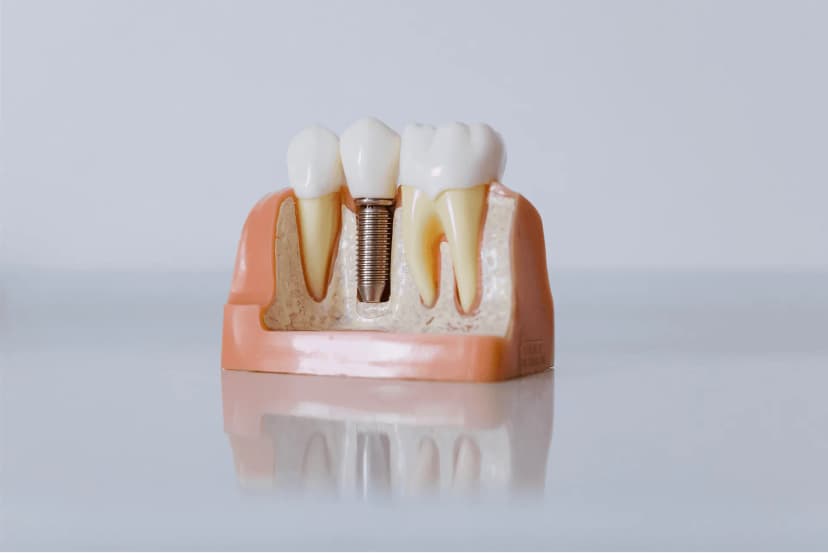
A tooth is made up of three layers from the outside in:
- Enamel — the outermost protective layer
- Dentine — the hard tissue beneath the enamel
- Pulp — the innermost region containing blood vessels, nerves and connective tissue
When bacteria reach the pulp through decay, a fracture or trauma, an infection develops. At this stage a filling alone is not sufficient, and root canal treatment becomes necessary.
Why Is Root Canal Treatment Needed?
Root canal treatment is indicated in the following situations:
- Deep decay — bacterial infection that has reached the pulp
- Tooth fracture or crack — if the pulp is exposed
- Repeated fillings — when the same tooth has been filled multiple times and the pulp has been damaged
- Trauma — pulp necrosis (death of the nerve) following a blow
- Abscess formation — a collection of infection at the root tip
Symptoms That May Indicate Root Canal Treatment
| Symptom | Likely Cause |
|---|---|
| Spontaneous throbbing pain | Pulp infection |
| Prolonged sensitivity to hot or cold | Pulpal inflammation (pulpitis) |
| Discolouration (darkening) of the tooth | Pulp necrosis |
| Swelling or sinus tract on the gum (abscess) | Periapical infection |
| Pain on chewing | Periodontal ligament inflammation |
| Facial swelling | Advanced infection |
Important: If you are experiencing any of these symptoms, see your dentist without delay. Early intervention increases the chance of saving the tooth.
How Is Root Canal Treatment Performed? Step by Step
1. Diagnosis and Radiographs
At the first visit, the tooth is assessed with radiographs. A 3-D CBCT scan may also be taken to examine the root canal anatomy in detail. The number of canals and the extent of infection are determined.
2. Local Anaesthesia
The procedure is carried out under local anaesthesia. The tooth and surrounding tissues are completely numbed. You do not feel pain.
3. Isolation (Rubber Dam)
The tooth being treated is isolated with a rubber-dam sheet. This:
- prevents saliva contamination
- provides a sterile working field
- stops small instruments being swallowed
4. Pulp Removal and Canal Cleaning
An access cavity is made through the top of the tooth, and the infected pulp tissue is removed with special instruments. The canals are widened and irrigated with disinfectant solutions.
5. Canal Shaping
The canals are shaped to ensure the filling material seats completely. Modern rotary (Ni-Ti) systems speed up this stage while improving precision.
6. Canal Obturation
The cleaned and shaped canals are filled with a biocompatible material called gutta-percha. The canal entrances are sealed with a specialised sealer.
7. Restoration (Filling or Crown)
Once root canal treatment is complete, the top of the tooth is restored:
- With minimal tooth loss → a composite filling is sufficient
- With significant tooth loss → a crown is recommended
Clinical note: For molars, I strongly recommend a crown after root canal treatment. Under chewing forces, a tooth restored only with a filling carries a risk of fracture.
Is Root Canal Treatment Painful?
No. Thanks to modern local anaesthesia, you do not feel pain during root canal treatment. The procedure is no different from having a filling placed.
Mild post-treatment sensitivity and tenderness for a few days is normal:
| Time Frame | What to Expect |
|---|---|
| First 24–48 hours | Mild pain, controlled with painkillers |
| 3–5 days | Sensitivity decreases |
| 1 week | Largely back to normal |
| 2 weeks+ | Complete healing |
Ibuprofen or paracetamol are usually sufficient. Use them at the dose recommended by your dentist.
How Many Visits Does Root Canal Treatment Take?
| Case | Number of Visits | Duration |
|---|---|---|
| Single-rooted tooth (front teeth) | 1 visit | 30–45 minutes |
| Multi-rooted tooth (molars) | 1–2 visits | 45–90 minutes |
| Complex case (abscess, curved roots) | 2–3 visits | 45–60 min each |
Most root canal treatments can be completed in a single visit. However, in advanced infections your dentist may place medication in the canal and wait a few days before obturation.
Aftercare Following Root Canal Treatment
First 24 Hours
- Avoid hot food and drinks until the anaesthesia wears off (to prevent biting the tongue or lip)
- Avoid hard foods
- Take painkillers before pain begins
First Week
- Do not chew hard food on the treated side
- Avoid very hot and very cold foods
- Continue brushing normally
- Complete any antibiotic course prescribed by your dentist
Long Term
- Do not delay the crown on a root-filled tooth
- Keep every six-month check-up
- Contact your dentist immediately if pain or swelling returns
Root Canal Treatment or Extraction?
Saving the tooth is always the priority. A natural tooth preserved with root canal treatment is more advantageous — both biologically and economically — than an implant or bridge following extraction.
| Criterion | Root Canal Treatment | Extraction + Implant |
|---|---|---|
| Preserves the natural tooth | ✅ Yes | ❌ No |
| Treatment duration | 1–2 visits | 3–6 months |
| Cost | More affordable | 3–4 times higher |
| Success rate | 90–95% | 95–98% |
| Bone loss | None | Possible after extraction |
However, in some situations the tooth cannot be saved:
- Severe root fracture
- Massive tooth loss (non-restorable)
- Repeated failed root canals where apical surgery is not feasible
What Is Endodontics? The Root Canal Specialty
Endodontics is the dental specialty dealing with the pulp (nerve-vessel tissue) and the tissues surrounding the root tip. The word comes from the Greek endo (inside) and odont (tooth). An endodontist is a dentist with 3–4 years of additional specialist training in root canal treatment.
When Is an Endodontist Needed?
- Teeth with complex canal anatomy (multi-rooted, curved canals)
- Retreatment after a failed first root canal
- Apical surgery (surgery at the root tip)
- Calcified (obliterated) canals
- Saving a tooth after trauma
Root Canal Retreatment
Although root canal treatment has a success rate of 87–95%, retreatment may occasionally be required:
Why Is Retreatment Needed?
- Canals that were inadequately cleaned or missed
- Insufficient quality of the previous root filling
- New decay allowing bacteria to re-enter the canal
- Tooth fracture and leakage because a crown was not placed
- Complex canal anatomy (for example the MB2 canal)
The Retreatment Process
- The existing crown and root filling are removed
- Access to the canals is re-established
- The old filling is removed with specialist instruments
- The canals are reshaped and disinfected
- A new root filling is placed
- A new crown is planned
Retreatment fee: 1.5–2 times that of standard root canal treatment.
Microscopic Root Canal Treatment
In modern endodontics, the dental operating microscope significantly increases success:
- 25× magnification reveals canal orifices and anatomical detail clearly
- Missed canals (such as MB2) can be located
- Separated instrument fragments can be retrieved
- Perforations can be repaired precisely
- Powerful illumination is provided during the procedure
💡 At our clinic, every root canal treatment is carried out with modern equipment and rubber-dam isolation.
What Happens If Root Canal Treatment Fails?
Systematic reviews report a success rate of 87–95%; placing an appropriate restoration (a crown) afterwards is the single most important factor improving this rate. If the treatment does not succeed:
- Retreatment — the old filling is removed and the canals are recleaned
- Apicoectomy — the root tip is surgically cleaned
- Extraction — considered only as a last resort
Related Guides
For more information on endodontics and dental health:
- Root Canal vs Extraction — Choosing the right option
- Pain After Root Canal Treatment — Is it normal and when will it pass?
- What Is Endodontics? — The root canal specialty
- Dental Abscess Treatment — Infection management
References
- Ng YL, Mann V, Gulabivala K. Outcome of primary root canal treatment: systematic review of the literature — Part 1. International Endodontic Journal. 2007;40(12):921–939. PubMed
- Drescher A, et al. Outcomes of primary root canal therapy: An updated systematic review. J Endod. 2022;48(8). PMC
- Yamaguchi T, et al. Long-term tooth survival and success following primary root canal treatment: a 5- to 37-year retrospective observation. International Endodontic Journal. 2023;56(7):802–815. PMC
Related Treatment Pages
This content is for informational purposes only and does not replace medical diagnosis or treatment. Please consult a specialist for decisions about your oral and dental health.