
What Is a Frenectomy?
Frenectomy is carried out in two main regions:
- Lingual frenectomy (tongue-tie release): Release of the frenum that connects the underside of the tongue to the floor of the mouth. This is the treatment for ankyloglossia (tongue-tie).
- Labial frenectomy (lip-tie release): Adjustment of the frenum that connects the inner surface of the upper or lower lip to the gum. It is particularly indicated when the upper labial frenum causes a diastema (gap) between the upper central incisors.
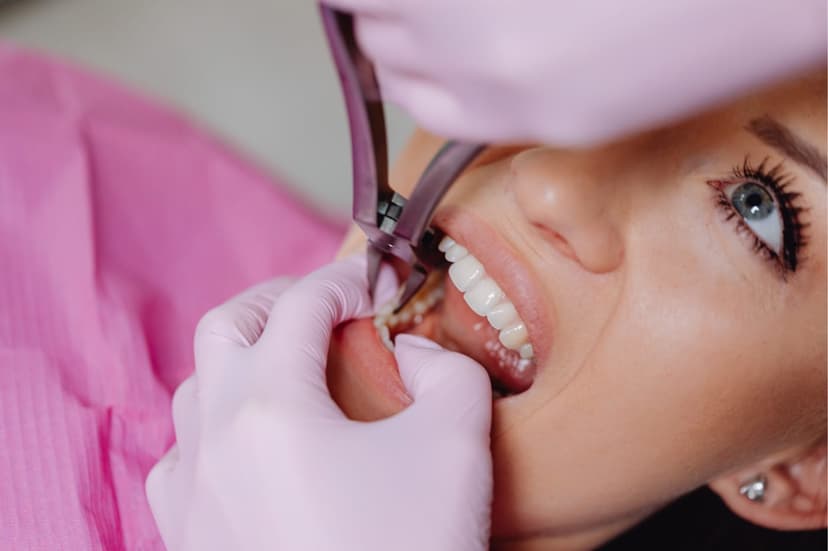
In both cases, frenectomy is a short, safe and effective oral surgery procedure. At Derya Dental Clinic Maltepe, frenectomy is performed by an oral and maxillofacial surgeon.
Learn more about our oral surgery treatments →
What Is Tongue-Tie (Ankyloglossia)?
Ankyloglossia — commonly called tongue-tie — is a congenital condition in which the lingual frenum is shorter or thicker than normal, restricting tongue movement. It presents differently at different ages.
Symptoms in Infants
Tongue-tie is often first noticed in infants. During breastfeeding, the following signs are typical:
- Difficulty latching: The baby cannot maintain a proper latch at the breast and keeps slipping off.
- Poor weight gain: Inefficient feeding means the baby is not taking in enough milk.
- Long, exhausting feeds: Each feed takes much longer than it should.
- Breast pain in the mother: Poor latch causes cracked and painful nipples.
- Clicking sound: A clicking noise from the baby's mouth during feeding.
In infants, tongue-tie is usually identified by the paediatrician or paediatric dentist. Early intervention can resolve feeding difficulties very quickly.
Symptoms in Children
Tongue-tie not recognised in infancy often presents differently in childhood:
- Speech difficulties: Problems with sounds such as "r", "l", "t", "d" and "s".
- Difficulty eating: Chewing and swallowing solid foods can be awkward.
- Inability to protrude the tongue: The child cannot push the tongue past the lips or reach the palate.
- A heart-shaped tongue tip: When protruded, the tongue has a notch at the tip.
Tongue-Tie in Adults
Untreated tongue-tie in adults tends to turn into chronic problems that reduce quality of life:
- Early fatigue when speaking and hoarseness
- Difficulty maintaining oral hygiene (the tongue cannot clean the mouth adequately)
- Social self-consciousness because of restricted tongue movement
- Difficulty playing some musical instruments or singing
- An association with sleep apnoea in some cases
Lip-Tie Problems
A lip-tie is a thick, short or low-placed frenum that connects the inner surface of the upper lip to the gum. An upper labial frenum problem can cause feeding difficulties in infants and aesthetic or oral health issues later on.
How a Lip-Tie Affects Oral Health
- Diastema (midline gap): A thick upper labial frenum can hold open a persistent gap between the two upper central incisors. Even with orthodontic treatment, a lasting result may be difficult to achieve without addressing the frenum.
- Risk of gum recession: A tight frenum exerts constant pull on the anterior gingiva and predisposes to gum recession.
- Impact on orthodontic outcome: An untreated upper labial frenum is one of the most common reasons for a closed diastema to re-open after braces.
- Denture and implant fit: In removable denture wearers, a tight frenum makes retention difficult.
For lip-tie problems, labial frenectomy releases the frenum and removes these adverse effects on oral health.
How Is a Frenectomy Performed?
Frenectomy is a short, safe and commonly performed oral surgery procedure. The chosen method depends on the patient's age, the anatomy of the frenum and the surgeon's preference.
Conventional (Scalpel) Frenectomy
In the traditional technique, a surgical scalpel is used to release the frenum, with tissue freeing where needed. A few sutures may be placed. This approach is particularly suitable for thick or fibrous frena.
Laser Frenectomy
A diode laser or Er:YAG laser is used to cut the frenum. The advantages of the laser technique include:
- Minimal or no bleeding
- Usually no need for sutures
- Faster healing
- Lower risk of infection
Anaesthesia and Procedure
- Local anaesthesia numbs the surgical field so that the patient feels no pain.
- In infants with very thin frena, topical anaesthesia alone may be sufficient.
- The procedure takes an average of 15–30 minutes.
- The patient goes home the same day; no hospital stay is required.
At Derya Dental Clinic, frenectomy is carried out by Dr Aykut Gürel with modern surgical equipment in a sterile environment.
Frenectomy in Children
The decision to perform frenectomy in a child depends on the severity of the symptoms and the child's age. Not every tongue- or lip-tie needs surgery; but where there is a clear adverse effect on feeding, speech or tooth alignment, early intervention becomes important.
Age and Timing
- Neonatal period (0–6 months): If breastfeeding is compromised and tongue-tie has been identified, frenectomy can be performed at the earliest stage. In neonates the procedure is very brief and healing is rapid.
- Early childhood (2–6 years): Recommended for tongue-tie that is affecting speech development.
- Mixed dentition (6–12 years): Where a lip-tie is producing a gap between the front teeth, frenectomy may be needed before orthodontic treatment.
Approach to Children
Frenectomy in children is carried out with an age-appropriate approach to communication and the clinical environment. Informing families in detail, acclimatising the child to the clinic and creating a positive experience all improve treatment outcomes.
Recovery
Healing after frenectomy is usually quick and uneventful. Recovery time depends on the site and the technique used.
The First Few Days
- Mild pain and swelling are normal; simple analgesics recommended by your surgeon are usually enough.
- For the first 24 hours choose soft, lukewarm foods.
- Avoid spicy, acidic and very hot food.
- Maintain careful oral hygiene.
Tongue Exercises (Myofunctional Therapy)
After a lingual frenectomy in particular, tongue exercises are the single most important part of recovery and a key factor in long-term success. These exercises:
- Help the tongue reach its full range of movement
- Reduce the risk of reattachment (relapse)
- Support the development of speech and swallowing
Exercises begin the day after surgery and are continued for 4–6 weeks, on average. Your surgeon will give you a personalised exercise programme.
Full Healing Time
- After laser frenectomy: largely healed within 3–5 days
- After conventional frenectomy: fully healed within 7–10 days
- Sutures usually dissolve on their own or are removed at 7–10 days
Booking a Frenectomy
Is your baby struggling to breastfeed, your child finding speech difficult, or is there a persistent gap between your front teeth? At Derya Dental Clinic Maltepe, oral and maxillofacial surgeon Dr Aykut Gürel offers consultation and treatment for frenectomy.
Dr Aykut Gürel | Oral and Maxillofacial Surgeon | Derya Dental Clinic Maltepe
📞 0216 572 05 20 💬 WhatsApp appointment
References
This article has been prepared by an oral and maxillofacial surgeon in light of clinical experience and the current peer-reviewed literature. The studies below provide the evidence base for the medical information in this article.
-
Hill RR, Lee CS, Pados BF. The prevalence of ankyloglossia in children aged under 1 year: a systematic review and meta-analysis. Pediatric Research. 2021;90(2):347–356. doi:10.1038/s41390-020-01239-y
-
Cordray H, Raol N, Mahendran GN, et al. Quantitative impact of frenotomy on breastfeeding: a systematic review and meta-analysis. Pediatric Research. 2024;95(1):32–41. doi:10.1038/s41390-023-02784-y
-
Buryk M, Bloom D, Shope T. Efficacy of neonatal release of ankyloglossia: a randomized trial. Pediatrics. 2011;128(2):e273–e281. doi:10.1542/peds.2011-0077
-
Carnino JM, Rodriguez Lara F, Chan WP, Kennedy DG, Levi JR. Speech outcomes of frenectomy for tongue-tie release: a systematic review and meta-analysis. Annals of Otology, Rhinology, and Laryngology. 2024;133(6):566–574. doi:10.1177/00034894241236234
-
Baxter R, Merkel-Walsh R, Baxter BS, Lashley A, Rendell NR. Functional improvements of speech, feeding, and sleep after lingual frenectomy tongue-tie release: a prospective cohort study. Clinical Pediatrics. 2020;59(9-10):885–892. doi:10.1177/0009922820928055
-
Protasio ACR, Galvao EL, Falci SGM. Laser techniques or scalpel incision for labial frenectomy: a meta-analysis. Journal of Maxillofacial and Oral Surgery. 2019;18(4):490–499. doi:10.1007/s12663-019-01196-y
-
Sarmadi R, Gabre P, Thor A. Evaluation of upper labial frenectomy: a randomized, controlled comparative study of conventional scalpel technique and Er:YAG laser technique. Clinical and Experimental Dental Research. 2021;7(4):466–477. doi:10.1002/cre2.374
-
Suter VGA, Heinzmann AE, Grossen J, Sculean A, Bornstein MM. Does the maxillary midline diastema close after frenectomy? Quintessence International. 2014;45(1):57–67. doi:10.3290/j.qi.a30772
-
Tadros S, Ben-Dov T, Cathain EO, Anglin C, April MM. Association between superior labial frenum and maxillary midline diastema — a systematic review. International Journal of Pediatric Otorhinolaryngology. 2022;156:111063. doi:10.1016/j.ijporl.2022.111063
-
Baxter RT, Zaghi S, Lashley AP. Safety and efficacy of maxillary labial frenectomy in children: a retrospective comparative cohort study. International Orthodontics. 2022;20(2):100630. doi:10.1016/j.ortho.2022.100630
Related Treatment Pages
This content is for informational purposes only and does not replace medical diagnosis or treatment. Please consult a specialist for decisions about your oral and dental health.