
What Is Bone Loss?
Bone loss is progressive if untreated — volume reduces every month and treatment options narrow. Early intervention is critical.
Symptoms of Jaw Bone Loss
Bone loss usually progresses painlessly. The following signs may be a warning:
Early Signs
- Loose or wobbly teeth
- Gum recession — tooth roots become more visible
- Increasing gaps between teeth
- Dentures that no longer fit as well
- Difficulty chewing
Advanced Signs
- Changes in facial shape — reduced lower-face height
- Sunken lips — loss of support
- Loss of definition along the jawline
- Pain and tenderness — particularly in denture wearers
- Dry mouth and bad breath
💡 When to see a dentist: If you have any of these signs, an assessment with 3-D CBCT is important. Early diagnosis expands your treatment options.
Causes of Bone Loss
1. Tooth Loss (Most Common)
After a tooth is extracted the area loses stimulation of the bone. In the first year, 25% of the volume can be lost; by 3 years, 40–60%.
2. Gum Disease (Periodontitis)
Bacterial infection spreads from the gums to the bone, causing bone destruction. Untreated gingivitis progresses to periodontitis.
3. Long-Term Denture Wear
Removable dentures transmit chewing forces to the gums rather than the bone, which accelerates bone loss.
4. Other Causes
- Ageing: Natural reduction in bone density
- Osteoporosis: Generalised bone density loss (including the jaw)
- Cysts and tumours: Destroy bone from within
- Trauma: Following an accident or impact
- Smoking: Disrupts blood flow and slows bone healing
How Is Bone Loss Treated?
Treatment is planned in a stepwise way based on the extent and location of bone loss:
Step 1: Preventive Treatment (Mild Loss)
- Professional cleaning and gum treatment
- Calcium and vitamin D supplementation
- Regular check-ups (every 6 months)
- Smoking cessation support
Step 2: Bone Grafting (Moderate Loss)
A bone graft is placed in the defect to rebuild the bone.
- Healing time: 3–6 months
- Success rate: 95–98%
- Price: 3,000–12,000 TL
Step 3: Sinus Lifting (Upper Jaw Loss)
When the upper back jaw lacks adequate bone height, the sinus floor is lifted and grafted.
- Healing time: 4–8 months
- Success rate: 90–95%
- Price: 5,000–15,000 TL
Step 4: Advanced Surgical Techniques (Severe Loss)
- Block bone graft: Bone taken from the patient's own jaw
- Zygomatic implants: Fixed into the cheekbone — no grafting needed
- All-on-4: Most efficient use of the remaining bone
Step 5: Dental Implants (Permanent Solution)
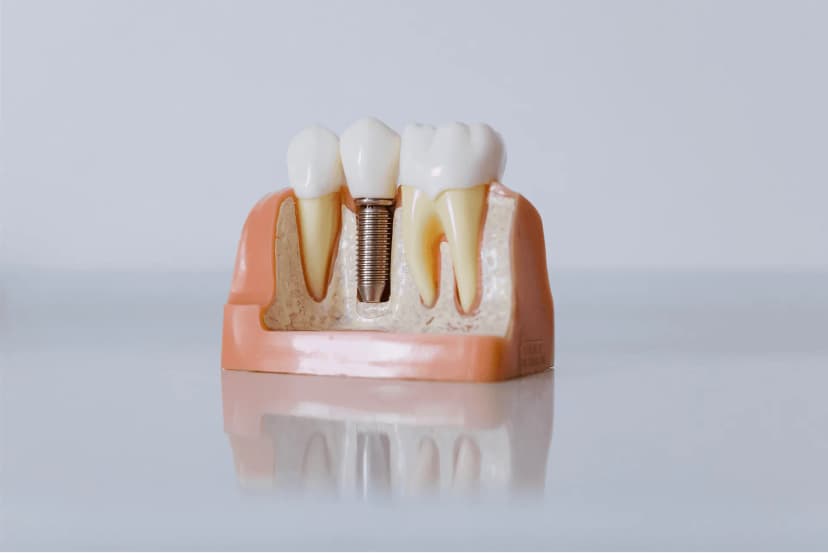
Once the bone is prepared, a dental implant is placed. The implant transmits chewing forces back into the bone, preventing further resorption. Dental implants are the only definitive way to stop bone loss.
What Helps Bone Loss?
Reversing bone loss requires professional treatment. However, supportive measures include:
Nutrition
| Nutrient | Sources | Effect |
|---|---|---|
| Calcium | Milk, cheese, broccoli | Bone building block |
| Vitamin D | Fish oil, eggs, sunlight | Calcium absorption |
| Vitamin C | Oranges, kiwis, peppers | Gum health |
| Magnesium | Hazelnuts, almonds, dark leafy greens | Bone mineralisation |
Lifestyle
- Stop smoking — improves bone circulation
- Regular exercise — supports general bone density
- Limit alcohol — excessive intake reduces bone density
- Stress management — helps control bruxism
Oral Care
- Brush twice a day + floss
- Antibacterial mouthwash
- Professional cleaning every 6 months
- Treat early decay and gum problems
Bone Loss and Dental Implants
Implant treatment is possible in patients with bone loss. Modern techniques offer a solution for almost any situation:
| Bone Status | Solution | Waiting Period |
|---|---|---|
| Mild loss | Same-session graft + implant | 3–6 months |
| Moderate loss | Sinus lift + implant | 4–8 months |
| Severe loss | Implant after block graft | 6–12 months |
| Complete loss | Zygomatic implant | Same-day teeth |
References
- Aghaloo TL, Moy PK. Which hard tissue augmentation techniques are the most successful in furnishing bony support for implant placement? Int J Oral Maxillofac Implants. 2007;22 Suppl:49-70. PubMed
- Araujo MG, Lindhe J. Dimensional ridge alterations following tooth extraction. J Clin Periodontol. 2005;32(2):212-218. PubMed
- Pjetursson BE, Tan WC, Zwahlen M, Lang NP. A systematic review of the success of sinus floor elevation. J Clin Periodontol. 2008;35(8 Suppl):216-240. PubMed
For bone-loss treatment, at Derya Dental Clinic in Maltepe we use 3-D CBCT to assess your bone condition.
📞 0216 572 05 20 💬 WhatsApp appointment
Related Treatment Pages
This content is for informational purposes only and does not replace medical diagnosis or treatment. Please consult a specialist for decisions about your oral and dental health.