
💡 In short: If you have been told "you don't have enough bone for implants," zygomatic implants are often the graft-free solution. They anchor into the cheekbone, skip the long grafting wait, and support fixed teeth — frequently on the same day. Current systematic reviews report an average 6-year survival of 96.2% (Al-Nawas et al., 2023). At our clinic we use the Italian JDZygoma system with the Z-GO Guide™ guided-surgery protocol.
What Is a Zygomatic Implant?
After tooth loss, the jawbone gradually resorbs. In the back of the upper jaw this shrinkage meets the maxillary sinus cavity, so the bone height needed for a standard implant disappears. The classic fix — bone grafting and sinus lifting — works in most cases, but in severe resorption (Cawood-Howell class V–VI) grafting becomes less predictable and can stretch treatment to a year.
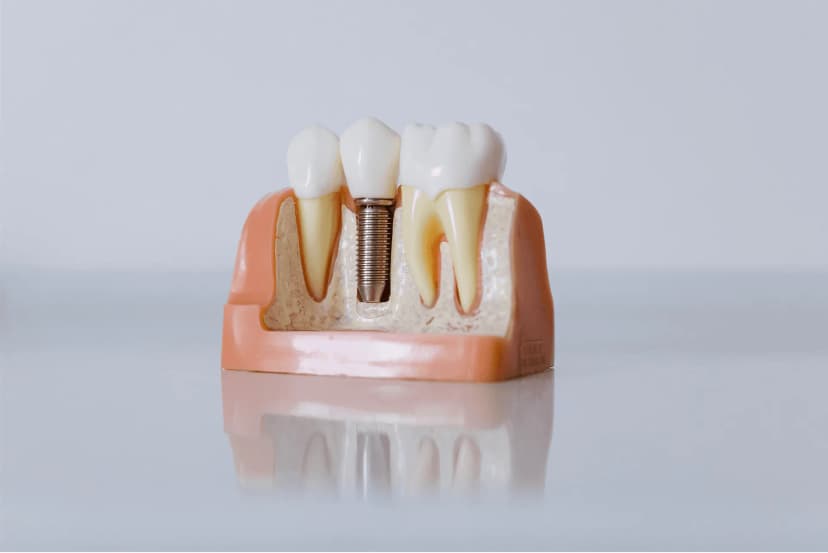
Zygomatic implants bypass this. Rather than depending on the missing alveolar bone, the implant is anchored into the zygomatic bone, which is thick, cortical and strong. This gives high stability the moment the implant is placed and, in most cases, allows immediate loading (same-day fixed temporary teeth).
Dental zygomatic implant ≠ facial cheek implant. The "zygomatic implant" on this page is a dental implant that carries a fixed prosthesis to replace missing teeth. The cosmetic "malar / cheek implant" used in plastic surgery to enhance facial contours is a completely different device with no connection to the teeth. The two should not be confused.
Who Is a Candidate?
Zygomatic implants are not a routine treatment — they are indicated in specific situations:
- Severe upper-jaw atrophy (Cawood-Howell V–VI), where posterior bone height is typically below 4 mm
- Long-term denture wearers (10–15 years) whose upper ridge has flattened and no longer retains a prosthesis
- Failed or insufficient sinus lift / graft, or patients who decline the long grafting route
- Total upper-jaw edentulism with advanced bone loss — suitable for All-on-4 zygoma hybrid or quad zygoma
- Rehabilitation after maxillary resection (tumour or trauma)
- Previous implant loss (peri-implantitis) with further bone deterioration
Who Is Not a Candidate?
- Active maxillary sinusitis or untreated chronic sinus disease (ENT assessment and treatment first)
- Uncontrolled systemic disease (uncontrolled diabetes, active chemo/radiotherapy history, severe osteoporosis needing special evaluation)
- Heavy smoking (lowers success; should at least stop peri-operatively)
- Active severe gum or oral infection (must be brought under control first)
- Patients who cannot tolerate surgery / general anaesthesia
Candidacy is decided with a clinical examination and CBCT (3D scan) — a panoramic X-ray alone is not enough.
Zygomatic Implants vs Bone Grafting: Why Patients Fly In
| Bone Graft + Sinus Lift → Implants | Zygomatic Implants | |
|---|---|---|
| Total treatment time | 12–18 months | Days to a few months |
| Number of surgeries | Multiple (graft, then implants) | One |
| Number of trips (travel) | Several | Typically two |
| Graft "will it take?" risk | Yes | None (graftless) |
| Fixed teeth timing | After months of healing | Often same day |
| Best for | Moderate bone loss | Severe / class V–VI atrophy |
For an international patient, the graftless route usually means far fewer trips and months saved — the main reason zygomatic treatment is sought abroad.
Guided Surgery: JDZygoma System + Z-GO Guide™
The difficulty of zygomatic surgery is that the implant passes very close to the orbital floor, infra-orbital nerve and maxillary sinus. A few degrees of angular deviation translates into millimetres of target error. This is exactly why we plan the procedure with a guided protocol.
At our clinic, advanced upper-jaw atrophy cases use the JDZygoma zygomatic implant system by JDentalCare (Modena, Italy) — produced in Ø3.9 and Ø4.3 mm diameters and 30–60 mm lengths, designed for multicortical anchorage in the cheekbone, and compatible with standard prosthetic components for a full-arch fixed bridge.
For guided placement we use JDentalCare's patented Z-GO Guide™ concept:
- The patient's CBCT (3D scan) and digital impression are taken.
- Implant angle, length and entry point are planned in dedicated software; the surgeon approves the plan digitally.
- A patient-specific, bone-supported surgical guide is manufactured in medical-grade titanium by 3D laser printing.
- During surgery, the guide constrains the drill and implant to the planned trajectory; coronal and apical sleeves control depth and angle.
- The surgeon also receives a 3D-printed anatomical model and a digital plan summary.
Why guided surgery matters here. In the scientific literature, freehand zygomatic placement shows an average apical deviation of ~5 mm, which a static surgical guide reduces to ~1.3 mm (Traboulsi-Garet et al., 2024). A cadaver study reduced angular deviation from 4.92° freehand to 1.19° with a guide (p<0.001; Grecchi et al., 2021). Because survival is already high (~96%), the guide's real contribution is safety and predictability — keeping a safe distance from the orbit and sinus. This mirrors the lower complication rates seen with the modern anatomy-guided technique (sinusitis 9.5%→4.4%, paraesthesia 10.8%→0.55%; Kämmerer et al., 2023).
Transparency note: The accuracy and complication figures above come from independent studies evaluating guided zygomatic surgery in general; they are not attributed to any single product. JDZygoma and Z-GO Guide™ are registered systems of JDentalCare.
Configurations: Hybrid vs Quad Zygoma
| Configuration | Front | Back | Indication |
|---|---|---|---|
| All-on-4 + 2 Zygoma (hybrid) | 2 standard | 2 zygomatic | Bilateral posterior atrophy |
| All-on-4 + 1 Zygoma | 2 standard | 1 zygomatic + 1 standard | Unilateral posterior atrophy |
| Quad Zygoma | 2 zygomatic | 2 zygomatic | Severe front + back atrophy |
In quad zygoma, four zygomatic implants carry the full arch with no standard anterior implants. A systematic review reports 98% implant survival and 100% prosthetic success for quad zygoma (Lan et al., 2021; Varghese et al., 2021). It should be performed only by highly experienced surgeons.
The Treatment Journey for International Patients
Most patients complete treatment in two trips:
- Remote assessment. You share your CBCT / panoramic scan with us via WhatsApp. Uzm. Dt. Aykut Gürel personally reviews it and, if you are a candidate, prepares a written treatment plan and fixed quote.
- Trip 1 (surgery + fixed temporaries). CBCT-based digital planning and, where indicated, a Z-GO Guide™ custom guide. Zygomatic implants are placed under general anaesthesia in a fully-equipped hospital; with sufficient primary stability, a same-day fixed temporary bridge is fitted.
- Healing at home. Osseointegration continues over 4–6 months, with remote follow-up and coordination.
- Trip 2 (final prosthesis). A digital impression is taken and the final zirconia or hybrid fixed bridge is delivered.
As a guide: a hybrid single-arch plan (2 zygomatic + 2–4 standard implants) is €8,100–11,500 (£6,900–9,850) and quad zygoma starts from €12,500 (£10,700) — prosthesis included. Your exact figure comes as a personalised written quote after your scan is reviewed.
Step by Step: The Surgery
1. Detailed pre-operative work-up
- CBCT (3D scan) mapping cheekbone quality and sinus anatomy (mandatory)
- Digital planning and, where indicated, a Z-GO Guide™ patient-specific guide
- Systemic health review (diabetes, anticoagulants, smoking)
- Anaesthesia consultation for general-anaesthesia candidates
- Informed consent — risks and benefits explained in detail
2. Anaesthesia
- Single-side / limited cases: local anaesthesia + IV sedation
- Quad zygoma / multiple implants: general anaesthesia in a fully-equipped hospital
3. Surgery (1.5–3 hours)
The flap is raised, the sinus-in or sinus-out path is chosen per anatomy (ZAGA), the guide directs the drills, the implants are placed, and primary stability is confirmed (target >35 Ncm).
4. Same-day fixed temporaries
With sufficient primary stability, a fixed temporary bridge is fitted the same day; a soft diet is advised for 6–8 weeks.
5. Final prosthesis (after 4–6 months)
A zirconia or acrylic-hybrid fixed bridge is delivered, followed by periodic reviews.
Recovery Timeline — Week by Week
| Period | What to expect | Advice |
|---|---|---|
| Days 1–3 | Peak swelling/bruising, mild–moderate pain | Cold compress, prescribed painkillers + antibiotics, sleep head-up |
| Week 1 | Swelling starts to settle | Soft/warm food, avoid exertion, gentle oral hygiene |
| Week 2 | Suture removal, comfort improves | Gradual return to daily activity; keep off smoking |
| Weeks 2–6 | Soft-tissue healing | Continue soft diet; don't stress the temporary bridge |
| Months 1–4 | Osseointegration | Regular reviews; gradually reintroduce firmer food |
| Months 4–6 | Final prosthesis | Digital impression + fixed zirconia/hybrid bridge |
Smoking is the most important modifiable risk to osseointegration; stopping for at least 8 weeks peri-operatively is strongly advised.
Success Rates — Current Evidence
| Study (year) | Type | n | Finding |
|---|---|---|---|
| Al-Nawas et al. (2023) | ITI consensus / review | — | Mean survival 96.2% at 6.3 years |
| Brennand Roper et al. (2023) | Systematic review + meta-analysis | 1,349 implants | 96.2% at 6 years; immediate loading 98.1% > delayed 95% |
| Moraschini et al. (2022) | Review + meta-analysis (≥5 yr) | 5,434 implants | ZI 96.5%; no difference vs conventional |
| Gutiérrez Muñoz et al. (2021) | Meta-analysis | 1,895 ZI | ZI failure 0.69%; sinus complications 4.7% |
| Lan et al. (2021) | Quad zygoma meta-analysis | 166 patients | Implant survival 98% |
Bottom line: with the right patient, an experienced surgeon and guided planning, zygomatic implants reach high success comparable to standard implants. Rates depend on how — and by whom — the surgery is done.
Risks and How They Are Minimised
- Maxillary sinusitis — the most common biological complication (~14.2% prevalence at 5 years; Al-Nawas 2023). Usually managed with antibiotics; ENT/FESS in resistant cases. Pre-op ENT review helps in patients with a sinus history.
- Orbital / infra-orbital penetration — rare but serious; the key reason the procedure must not be done without CBCT and guided planning.
- Soft-tissue dehiscence — mainly with the extra-sinus technique; treated with a keratinised tissue graft.
- Paraesthesia — usually temporary; markedly lower with the anatomy-guided technique (0.55%; Kämmerer 2023).
- Implant failure — roughly 0.7%/year in reviews (Brennand Roper 2023).
Cost of Zygomatic Implants in Turkey
As package guide prices, a hybrid single-arch plan (2 zygomatic + 2–4 standard implants) is €8,100–11,500 (£6,900–9,850) and a quad zygoma protocol (4 zygomatic implants) starts from €12,500 (£10,700) — including general anaesthesia in a fully-equipped hospital, the same-day temporary bridge and the final prosthesis. The exact figure depends on how many implants you need (hybrid vs quad), your anatomy and the custom surgical guide — still a fraction of UK / US prices for the same graftless, surgeon-led care.
You receive a personalised written quote after Uzm. Dt. Aykut Gürel reviews your CBCT/panoramic scan. Your quote clearly states what is included (surgery, general anaesthesia, same-day temporary bridge, final prosthesis) and what is not, so there are no surprises.
To get your personalised plan, share your CT/panoramic scan with us on WhatsApp. We will tell you honestly whether zygomatic implants are the right option for you — sometimes, if you have enough bone, a simpler solution is better.
Before / After Cases
Zygomatic implants can restore fixed teeth even for patients told "you don't have enough bone." This section presents anonymised case examples — shared with each patient's informed consent — with before/after panoramic and tomography images.
Results vary from person to person; these examples are documentation of completed cases, not a guarantee of outcome.
Case: Fully Guided Quad Zygoma
In a patient whose upper jaw had lost too much bone for conventional implants, four zygomatic implants (quad zygoma) were placed using a fully guided protocol after detailed CBCT assessment and digital planning.
What distinguishes this case is that implant positions were planned not only around the available bone, but around the ideal position of the fixed prosthesis — a prosthetic-driven zygomatic placement. In zygomatic surgery the cleanliness of the prosthetic design matters as much as bone contact; the guide secures maximum anchorage in the cheekbone while fixing the prosthetic emergence positions from the outset.
During surgery the zygomatic bone was prepared through the guide, primary stability was verified with torque values, and implant positions were confirmed on a post-operative CT scan. The case record is published on Uzm. Dt. Aykut Gürel's Instagram account.
Why Maltepe Derya Clinic (Istanbul)?
- Uzm. Dt. Aykut Gürel — Oral & Maxillofacial Surgeon; a reference for advanced implant and zygomatic cases on the Anatolian side of Istanbul.
- CBCT mandatory — every case is mapped in 3D; decisions are made on tomography, not a panoramic X-ray.
- Guided surgery — JDZygoma + Z-GO Guide™ millimetric planning in suitable cases.
- Hospital + general anaesthesia — comprehensive cases such as quad zygoma are performed in a fully-equipped operating theatre with an experienced anaesthesia team at Ataşehir Florence Nightingale Hospital.
- Stepwise decision-making — advanced surgery is recommended only when simpler, more predictable options are insufficient.
Sources
The survival, complication and accuracy figures in this guide are based on PubMed-indexed systematic reviews, meta-analyses and clinical studies.
- Al-Nawas B, Aghaloo T, Aparicio C, et al. ITI consensus report on zygomatic implants. Int J Implant Dent. 2023. PubMed
- Brennand Roper M, Vissink A, Dudley J, et al. Long-term survival of zygomatic implants: a systematic review and meta-analysis. Int J Implant Dent. 2023. PubMed
- Moraschini V, de Almeida DCF, Sartoretto SC, et al. Zygomatic vs conventional implants: a systematic review and meta-analysis. Clin Implant Dent Relat Res. 2022. PubMed
- Gutiérrez Muñoz D, et al. Survival rate and complications of zygomatic implants: a systematic review and meta-analysis. Biology (Basel). 2021. PubMed
- Kämmerer PW, Fan S, Aparicio C, et al. Surgical techniques, survival and complications of zygomatic implants: a systematic review. Int J Implant Dent. 2023. PubMed
- Lan K, et al. Quad zygomatic implants: a systematic review and meta-analysis. Int J Oral Maxillofac Implants. 2021. PubMed
- Traboulsi-Garet B, et al. Accuracy of zygomatic implant placement: freehand vs static vs dynamic guidance. J Craniomaxillofac Surg. 2024. PubMed
- Grecchi E, et al. A new surgical guide for zygomatic implants: an accuracy cadaver study. J Dent. 2021. PubMed
Have you been told you "don't have enough bone" for implants? Zygomatic implants are often the graft-free answer. At Maltepe Derya Dental Clinic, Uzm. Dt. Aykut Gürel — oral & maxillofacial surgeon — reviews your case with CBCT and provides a personalised written treatment plan.
📞 Phone: +90 216 572 05 20 💬 WhatsApp: +90 507 245 03 05
Related Treatment Pages
This content is for informational purposes only and does not replace medical diagnosis or treatment. Please consult a specialist for decisions about your oral and dental health.