
Jaw Surgery Under General Anesthesia and Advanced Implant Treatments
As Derya Dental Clinic, we perform all our advanced surgical operations safely under general anesthesia at Atasehir Florence Nightingale Hospital's fully equipped operating rooms, with an experienced anesthesia team.
Why a hospital setting? Advanced implant surgery requires sterile operating room conditions, a fully equipped anesthesia team, and emergency intervention capability. Operations performed in a hospital setting are both safer and far superior in terms of patient comfort.
Zygomatic Implant: A Solution for Patients with Advanced Bone Resorption
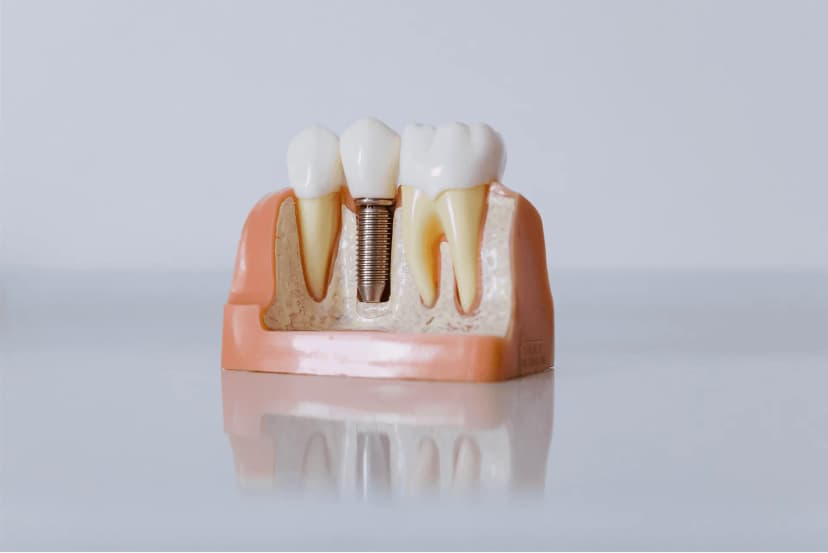
For patients with severe bone resorption in the upper jaw where standard implants cannot be placed, the zygomatic implant is one of the most effective treatment options. Named after the cheekbone (os zygomaticum), these specialized implants are anchored to the cheekbone rather than the jawbone.
Who Is a Candidate for Zygomatic Implants?
- Patients with advanced bone resorption in the upper jaw
- Patients who prefer not to undergo sinus lifting or major graft operations
- Patients who cannot wait for the long graft healing period
- Patients whose previous bone grafts have failed
- Patients requiring combined treatment with the All-on-4 technique
Advantages of Zygomatic Implants
| Advantage | Description |
|---|---|
| No bone graft required | Since it anchors to the cheekbone, jawbone volume is irrelevant |
| Quick results | Fixed temporary teeth can be placed in the same session |
| High success rate | Success rates of 95-98% are reported in the literature |
| Single surgical session | Solution in one operation instead of graft + healing + implant |
| All-on-X compatibility | Can be combined with All-on-4/6 concepts |
How Is Zygomatic Implant Surgery Performed?
- Detailed planning is done with 3D tomography
- Implant position and angle are determined with a digital surgical guide
- The operation is performed in a hospital setting under general anesthesia
- Zygomatic implants are placed into the cheekbone, and if necessary, standard implants are placed into the jawbone
- A temporary fixed prosthesis is placed in the same session
- Transition to the permanent prosthesis occurs after 4-6 months
Subperiosteal Implant: Fixed Teeth Even When There Is No Bone
For patients with extremely insufficient bone volume where grafting is not possible or those who do not wish to undergo advanced surgery, subperiosteal implants offer a modern alternative.
What Is a Subperiosteal Implant?
While conventional implants are placed inside the bone, subperiosteal implants are placed on top of the bone (beneath the periosteum) as a specially designed titanium framework. This framework is manufactured with 3D printing technology, custom-made for the patient's jaw anatomy.
Who Is a Candidate for Subperiosteal Implants?
- Patients with extremely thin jawbone
- Cases where bone grafting is not possible
- Lower jaw cases where zygomatic implants cannot be applied
- Patients who have been edentulous for a long time and have experienced severe bone loss
- Patients who do not wish to undergo major surgery due to age or systemic disease
Advantages of Subperiosteal Implants
- Can be applied even with very thin bone structure
- Perfect fit with patient-specific 3D design
- Enables rapid transition to fixed prosthesis
- Does not require major bone graft operations
- Shorter overall treatment duration
Zygomatic vs. Subperiosteal vs. Standard Implant Comparison
| Feature | Standard Implant | Zygomatic Implant | Subperiosteal Implant |
|---|---|---|---|
| Placement site | Inside jawbone | Cheekbone | On top of jawbone |
| Bone requirement | Sufficient bone essential | Jawbone irrelevant | Minimal bone sufficient |
| Anesthesia | Local sufficient | General anesthesia | General anesthesia |
| Surgical setting | Clinic | Hospital | Hospital |
| Healing time | 3-6 months | 4-6 months | 3-4 months |
| Same-day teeth | In some cases | Yes | Yes |
| Application area | Upper and lower jaw | Upper jaw only | Upper and lower jaw |
Why Florence Nightingale Hospital?
Advanced implant surgery requires equipment and a team that exceed clinic capabilities. The reasons we prefer to perform our operations at Atasehir Florence Nightingale Hospital:
- Fully equipped operating room: Sterile surgical environment, advanced imaging systems
- Experienced anesthesia team: Safe general anesthesia with an attending anesthesiologist
- Emergency intervention capability: Access to the ICU and all specialty physicians
- Patient comfort: Professional nursing care before and after the operation
- Reliability: JCI-accredited, healthcare service meeting international standards
Patient safety is our priority. Since the patient is asleep during all operations performed under general anesthesia, they feel no pain or fear. The anesthesia team continuously monitors all vital functions throughout the operation.
How Does the Treatment Process Progress?
1. Free Initial Examination and Evaluation
A 3D volumetric tomography scan is performed at our clinic. Bone structure, nerve locations, and sinus anatomy are evaluated in detail.
2. Digital Planning
Digital surgical planning is carried out using tomography data. Implant type, position, angle, and prosthesis design are determined.
3. Hospital Appointment
The operation date is planned at Florence Nightingale Hospital. Required blood tests and pre-anesthesia evaluation are performed.
4. Surgical Operation
Implants are placed under general anesthesia and a temporary fixed prosthesis is placed in the same session. The operation duration ranges from 2-4 hours depending on the case.
5. Healing and Follow-up
The healing process is monitored with regular check-ups. Transition to the permanent prosthesis occurs after 4-6 months.
Appointment and Information
If you have been told "you cannot get implants" due to bone deficiency, contact us to evaluate advanced implant options. Let us assess your condition with a free 3D tomography and examination.
Phone: 0507 245 03 05 WhatsApp: Get Information via WhatsApp
Related Treatment Pages
This content is for informational purposes only and does not replace medical diagnosis or treatment. Please consult a specialist for decisions about your oral and dental health.