
01
What Is Dental Bonding (Composite Aesthetics)?
02
When Is Bonding Applied?
- Chipped or cracked teeth: Repair of damage caused by trauma or chewing
- Gaps between teeth: Closing spaces (diastema) between teeth
- Shape irregularities: Correcting pointed, small, or disproportionate teeth
- Tooth discoloration: Covering localized stains that cannot be resolved with whitening
- Gum recession: Protecting exposed tooth roots
- Aesthetic fillings: Replacing old amalgam fillings in front teeth with composite
03
Bonding Application Process
Single Session, Quick Results
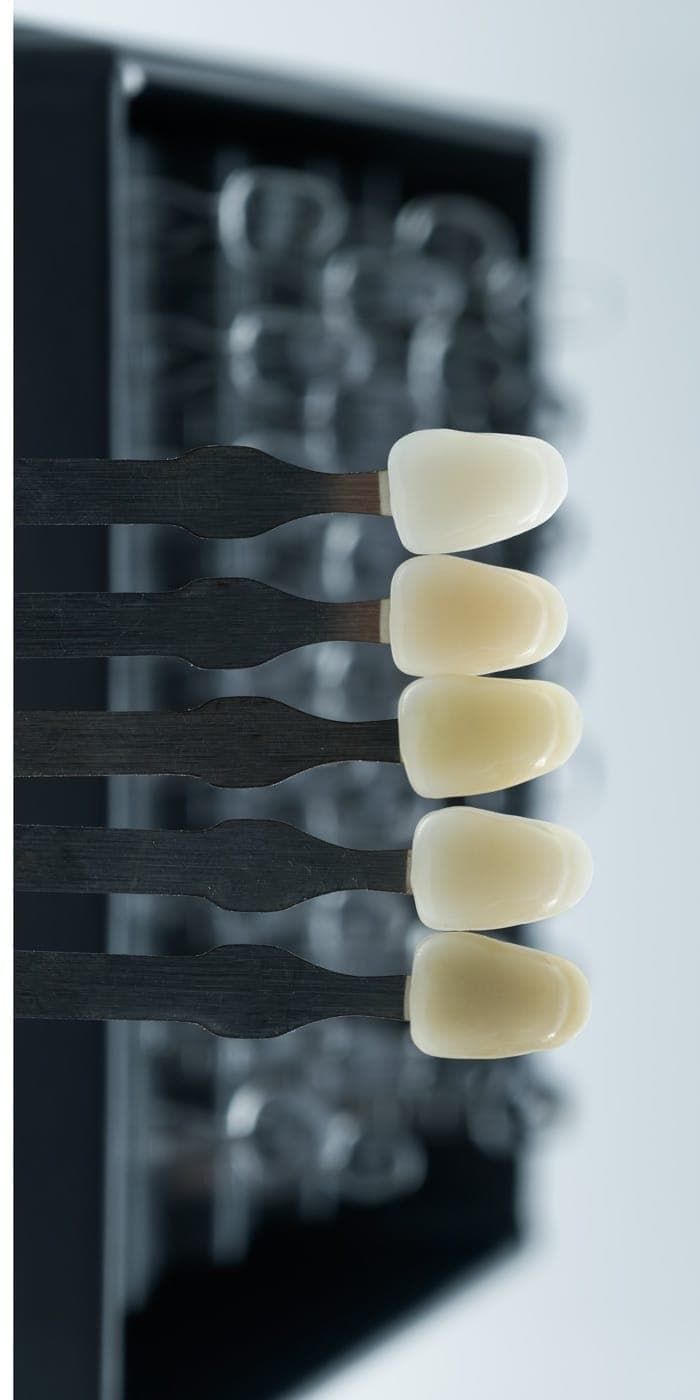
- Color matching: A composite shade matching your natural tooth color is selected
- Surface preparation: The tooth surface is lightly roughened and a bonding agent is applied
- Composite application: The resin material is applied and shaped layer by layer
- Curing: Each layer is hardened with a special UV light
- Finishing: Final adjustments are made to achieve a natural appearance and smooth surface
The entire procedure is typically completed within 30-60 minutes. In most cases, anesthesia is not even necessary.
04
Advantages of Bonding
| Advantage | Description |
|---|---|
| Single session | You get results on the same day |
| Tooth preservation | No damage to tooth structure |
| Economical | More affordable than veneers and crowns |
| No anesthesia | Anesthesia is not needed in most cases |
| Reversible | Can be removed or renewed if desired |
05
How Long Does Bonding Last?
Composite bonding treatment lasts an average of 5-10 years. Factors affecting its longevity:
- The treated area and chewing forces
- Oral hygiene habits
- Habits such as nail biting or pen chewing
- Tea, coffee, and tobacco consumption (staining risk)
Tip: Bonding is an excellent trial option before more permanent solutions such as laminate veneers or zirconia crowns.
06
Bonding vs Veneer Comparison
| Feature | Bonding | Laminate Veneer |
|---|---|---|
| Material | Composite resin | Porcelain |
| Number of sessions | 1 session | 2-3 sessions |
| Tooth reduction | None or minimal | Minimal (0.3-0.5 mm) |
| Durability | 5-10 years | 10-15 years |
| Stain resistance | Moderate | High |
| Price | Economical | Medium-high |
Related Treatment Pages
This content is for informational purposes only and does not replace medical diagnosis or treatment. Please consult a specialist for decisions about your oral and dental health.