
01
When Do Baby Teeth Fall Out?
| Primary Tooth | Age When Shed |
|---|---|
| Lower central incisors | 6–7 years |
| Upper central incisors | 7–8 years |
| Lateral incisors | 7–8 years |
| First molars | 9–11 years |
| Canines | 9–12 years |
| Second molars | 10–12 years |
💡 Every child develops at their own pace — a year or two either way is normal. If no tooth has come out by age 8, or a tooth is lost as early as 4, see a paediatric dentist.
02
How to Pull a Loose Baby Tooth at Home
When Home Extraction Is Safe
Pulling a tooth at home is only appropriate when:
- The tooth is very loose (dangling, almost ready to fall out)
- Your child is not in pain
- There is no sign of gum infection (swelling, redness, pus)
- Your child is willing and not frightened
Step by Step
- Wash your hands with soap
- Use a clean piece of gauze or a dry tissue
- Gently wiggle the tooth back and forth
- Wait for the tooth to come out on its own — do not force it
- Apply pressure with clean gauze for 10 minutes to stop any bleeding
- Rinse with salt water
What Not to Do
- Do not tie string around it and pull — risk of gum trauma and a broken root
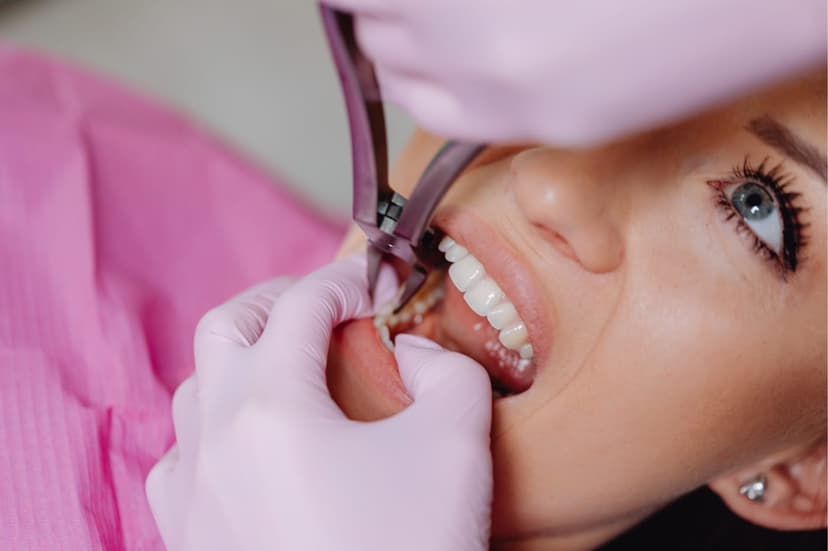
- Never use pliers
- Don't force a tooth that isn't ready
- Don't frighten your child — a traumatic extraction can cause long-term dental anxiety
03
When to See a Dentist
Professional extraction is needed if:
- The primary tooth is not loose but the adult tooth is already coming through behind it (shark teeth)
- There is swelling or pus on the gum
- The primary tooth has not fallen out at the expected age (delayed by more than 1–2 years)
- A root may have broken off during an attempted extraction at home
- Your child is in significant pain
- Early extraction is needed because of decay
04
What If a Baby Tooth Doesn't Fall Out?
If a primary tooth does not shed on time:
- The adult tooth may come through in the wrong position
- Crossbite or crowding can develop
- Orthodontic treatment may be needed
- A radiograph should be taken to check the position of the adult tooth
05
After the Tooth Comes Out
- Bleeding: 10–15 minutes of pressure with gauze is usually enough
- Eating: Soft, lukewarm foods for 1–2 hours afterwards
- Brushing: Gently brush around the area
- Adult tooth: Usually erupts in the same place within 1–6 months
06
References
- American Academy of Pediatric Dentistry. Guideline on management of the developing dentition and occlusion in pediatric dentistry. Pediatr Dent. 2016;38(6):289–301. aapd.org
- Proffit WR, Fields HW, Sarver DM. Contemporary Orthodontics. 6th ed. Elsevier; 2018.
- McIntyre GT, McIntyre GM. Teething troubles? Br Dent J. 2002;192(5):251–255. PubMed
For your child's primary-tooth problems, speak to our paediatric dentist at Maltepe Derya Dental Clinic.
📞 0216 572 05 20 💬 WhatsApp appointment
Related Treatment Pages
This content is for informational purposes only and does not replace medical diagnosis or treatment. Please consult a specialist for decisions about your oral and dental health.