Surgical Guide (Guide Plate): Benefits and 2026 Pricing

Ağız, Diş ve Çene Cerrahisi Uzmanı
Çene cerrahisi uzmanı Aykut Gürel, İstanbul Üniversitesi mezunu olup uzmanlık eğitimini Marmara Üniversitesi Ağız, Diş ve Çene Cerrahisi Anabilim Dalı'nda tamamlamıştır. Dental implantoloji, zigomatik implant cerrahisi ve dijital cerrahi planlama alanlarında çalışmaktadır.
Bu içerik Uzm. Dt. Aykut Gürel tarafından hazırlanmıştır. Yalnızca bilgilendirme amaçlıdır; klinik muayene yerine geçmez.
Son güncelleme: March 18, 2026
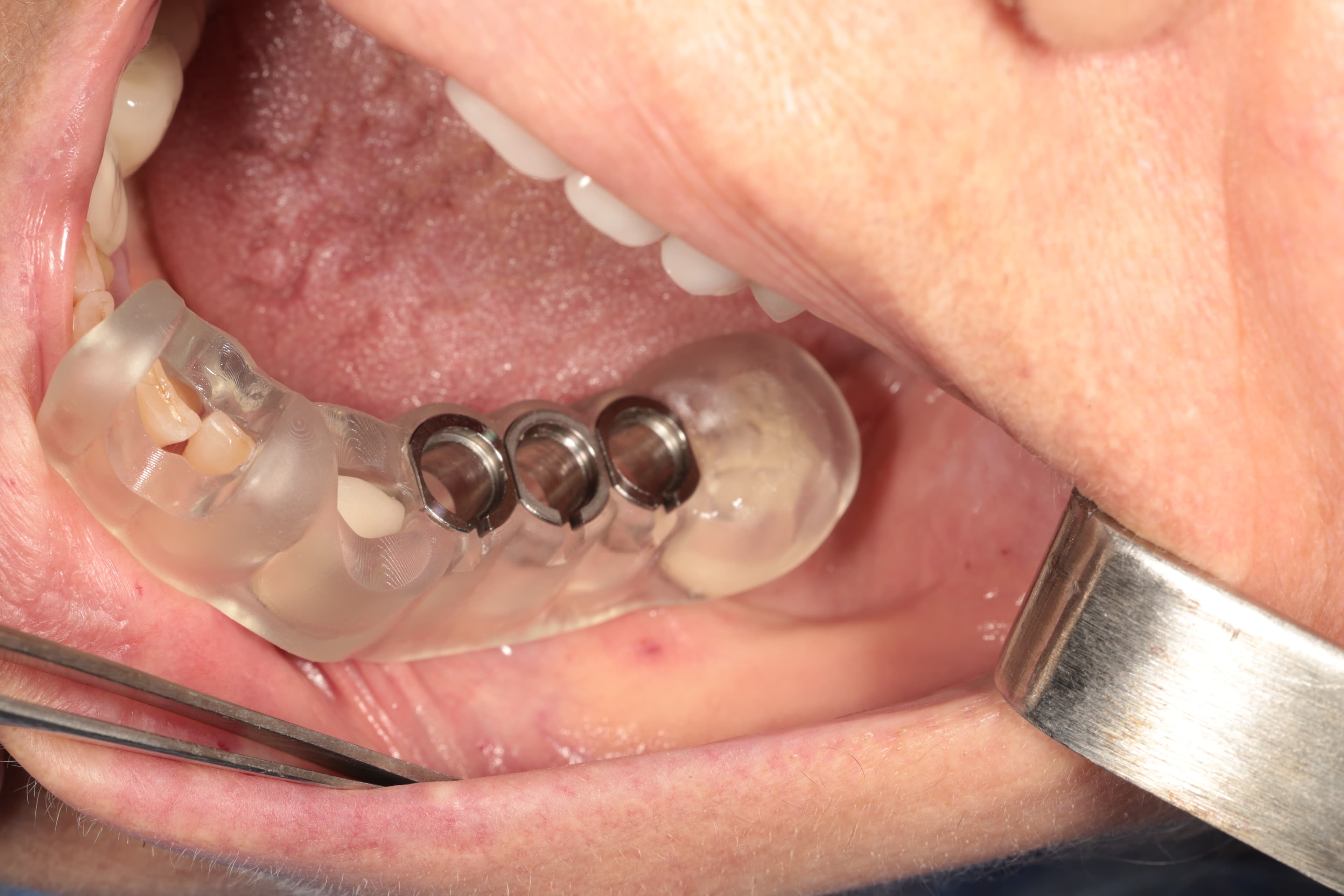
The surgical guide plate is a high-technology navigation system used in implant surgery. Designed through digital implant planning, this custom plate enables implant placement into the jawbone with millimetric precision. At our clinic in Maltepe, we use surgical guide plate technology to raise our implant success rate above 98% and provide our patients with a more comfortable treatment experience.
Surgical Guide (Guide Plate): Advantages and Current Pricing
Surgical guide plates serve as a "GPS navigation" system in implant surgery, reducing the margin of error to virtually zero.
How Does Surgical Guide Technology Work?
The surgical guide plate is a navigation tool that provides digital guidance to the surgeon during implant surgery. With this technology:
- Positional accuracy: The implant socket is drilled at the exact coordinates determined in the digital plan.
- Angular control: The implant angulation is fixed, preventing damage to adjacent tooth roots.
- Depth safety: The depth to which the drill can advance is limited, protecting nerves and sinuses.
- Flapless surgery: Flapless implant treatment can be performed with plate guidance.
- Shorter operation: Since the surgeon knows exactly where to enter, surgical time is reduced by 50%.
This system is critically important especially in complex treatments such as All-on-4 implants.
Digital Workflow: Step-by-Step Production Process
1. Imaging and Data Collection
- 3D Tomography: Bone structure analysis with CBCT tomography
- Digital impression: 3D model of the teeth with an intraoral scanner
- Data merging: Images are fused in specialized software
2. Computer-Aided Planning
- Bone analysis: Density, height, and width measurements
- Implant positioning: Location, angle, and depth determination
- Risk assessment: Nerve canal and sinus distance verification
- Prosthetic compatibility: Alignment with the future tooth design
3. Manufacturing Technologies
- 3D printing (SLA): High-precision resin printing
- CAD/CAM milling: Processing from metal or ceramic material
- Quality control: Dimensional accuracy and fit testing
- Sterilization: Preparation to surgical standards
Advantages of Guided Implant Surgery
Benefits for Patients
- Less pain: Minimally invasive surgical approach
- Faster healing: Tissues are less traumatized
- Shorter operation: Average 40-60% time savings
- Predictable outcomes: Pre-treatment result simulation
Benefits for Clinicians
- High precision: Accuracy within +/-0.5 mm
- Safe surgery: Protection of anatomical structures
- Reproducible results: Standardized procedure
- Reduced complications: Minimization of risk factors
When Is It Preferred?
Mandatory Applications
- Implants near the sinus: In the maxillary posterior region
- Near the nerve canal: In the mandibular posterior region
- Narrow bone structure: Situations requiring precise positioning
- Aesthetic zone: Perfect positioning in the anterior tooth area
Recommended Situations
- Multiple implants: In applications with 3 or more implants
- Full edentulism: In All-on-4, All-on-6 treatments
- Immediate implant: Immediate implant after tooth extraction
- After bone grafting: Following bone graft application
Safety and Success Rates
Clinical Data
| Parameter | Guided Surgery | Conventional Method |
|---|---|---|
| Success rate | 98-99% | 95-97% |
| Positional accuracy | +/-0.5 mm | +/-2-3 mm |
| Complication rate | 1-2% | 3-5% |
| Operation time | 30-45 min | 60-90 min |
Safety Measures
- Anatomical protection: Safety of nerve and vascular structures
- Controlled depth: Elimination of over-drilling risk
- Predictable outcomes: Pre-treatment simulation capability
Guided surgery reduces the complication rate by 80%, especially in high-risk cases.
Limitations and Considerations
Technical Limitations
- Mouth opening: Sufficient opening required (minimum 35 mm)
- Plate stability: Fixed support on teeth or implants
- Bone quality: Limited effectiveness in very soft bone
- Anatomical obstacles: Cannot be applied in severe jaw deformities
Cost Factors
- Additional planning time: 3-7 business days extra
- Production cost: 20-30% additional cost compared to conventional methods
- Special equipment: Guide-compatible surgical kits required
Current Price Guide
For Individual Implants
- Single implant guide: 2,500-3,500 TL
- 2-3 implant guide: 3,500-4,500 TL
- Premium material: +20-30% surcharge
Full-Arch Applications
- All-on-4 guide: 6,000-8,000 TL
- All-on-6 guide: 7,500-10,000 TL
- Dual-arch application: 12,000-15,000 TL
Factors Affecting Price
- Number and position of implants
- Technology used (3D printing/milling)
- Material quality (resin/metal)
- Clinical experience and equipment
For current pricing, visit our dental implant prices page or book a consultation appointment. You can contact our Istanbul Maltepe dentist.
Comparison with Conventional Methods
| Feature | Guided Surgery | Conventional Surgery |
|---|---|---|
| Planning time | 3-7 days | Same day |
| Surgical time | 30-45 minutes | 60-120 minutes |
| Precision | +/-0.5 mm | +/-2-3 mm |
| Pain level | Low (2-3/10) | Moderate (4-6/10) |
| Recovery time | 3-5 days | 7-14 days |
| Cost | 20-30% more | Standard |
| Success rate | 98-99% | 95-97% |
Post-Treatment Process
First 24 Hours
- Minimal swelling: 70% less swelling with guided surgery
- Pain control: Simple pain relievers are sufficient
- Diet: Normal eating with soft foods
Recovery Period
- Week 1: Return to daily activities
- Weeks 2-4: Full recovery
- Months 3-6: Implant healing process and prosthetic phase
Follow-Up Appointments
- Day 1: Check-up examination
- Week 1: Healing assessment
- Month 1: Preparation for prosthetic impression
For detailed information, review our post-implant recovery guide.
This content is for informational purposes only and does not replace medical diagnosis or treatment. Please consult a qualified healthcare professional for decisions regarding your oral and dental health.
Frequently Asked Questions
Answered by our specialist
Can a surgical guide plate be used for every patient?
Is guided surgery more painful?
How long does plate production take?
Is guided surgery safer?
How can I book an appointment for surgical guide plate application at your clinic in Maltepe?
Have questions about your treatment?
Consult our specialist doctors. Book an appointment and get a personalized treatment plan.
Related Articles

March 23, 2026
Oral and Maxillofacial Surgery in Maltepe: Safe Treatment with a Specialist
Looking for an oral surgeon in Maltepe? At Derya Dental Clinic, get impacted tooth extraction, implant surgery, jaw cyst removal, and bone grafting performed safely by Specialist Dt. Aykut Gurel.
March 23, 2026
Dental Fillings in Maltepe: Treatment Process, Types, and Prices
Looking to get a dental filling in Maltepe? Aesthetic composite fillings, porcelain inlays and onlays at Derya Dental Clinic. Filling types, prices, and care guide.
March 23, 2026
Dentist in Maltepe: Comprehensive Treatment with a Specialist Team
Looking for a dentist in Maltepe? At Derya Dental Clinic, get all your dental treatments done safely with a team of 5 dentists including an oral surgery specialist. Easy access in Findikli.